
Chia-Wen Teoh from PIMCO speaks to Drew Meredith at The Inside Network’s Alternatives Symposium in the Blue Mountains on asset-based lending and the next frontier in private credit.
Blog
-

Asia’s next chapter: How advisers should position capital for structural shifts
For advisers seeking to navigate the complexity of Asian markets, Peiqian Liu, Asia economist at Fidelity International, offers a clear-eyed view of the seismic demographic, technological and geopolitical trends shaping the region. Liu’s analysis goes well beyond short-term macro calls, instead identifying the social and structural undercurrents that will define how capital is allocated in the coming decades. Advisers who understand these themes will be better placed to position client portfolios for durable, long-term exposure to Asian growth.
Liu starts with a demographic truth that underpins much of Asia’s economic outlook: populations in East Asia are aging rapidly. “We’ve seen Japan and Korea go through it; now China is entering the demographic cliff,” she says. The implications are enormous. China’s working-age population is shrinking while new births decline, setting a structural cap on domestic demand and threatening long-term potential growth.
Rather than delay the reckoning, Liu argues that Beijing is facing this challenge head-on. “China proactively addressed the risks by curbing its property boom,” she says. That has left a painful short-term growth gap, but Liu sees it as a necessary policy choice to avoid an unsustainable debt spiral. More interestingly for investors, she notes that the pivot has set China on a course of rebalancing away from real estate and towards innovation-driven sectors like digitalisation, automation and AI.
This shift ties into another key theme Liu identifies, the role of technology in addressing demographic constraints. “China is now installing half of the world’s industrial robots,” she says, pointing to the emergence of “dark factories” that function without human intervention. These capital-intensive solutions are part of a new growth paradigm that hinges less on labour supply and more on productivity gains, especially in manufacturing.
Yet China’s current moment is not just a story of transformation, but also of macroeconomic recalibration. “For a long time, the ‘credit impulse’ was the only data point you needed to understand China’s economic cycles,” Liu reflects. (A term coined by economist Michael Biggs of Deutsche Bank in 2008, the credit impulse is the change in new credit issued in a nation in a period as a percentage of its GDP.) That model broke down since around 2019, she says, and today the Chinese economy is in a bifurcated state: on one hand, local governments struggle with revenue shortfalls as land sales dry up; on the other, central government is stepping in with significant bond issuance to stabilise growth.
Importantly for advisers, Liu stresses that this centralisation is likely a temporary measure. President Xi’s outreach to the private sector earlier this year signals a coming pivot back to entrepreneurial dynamism. “It was a significant moment,” she says. “The message was clear: the state took over to stabilise, but now it’s time to hand the baton back.” For equity investors, this shift could mean renewed momentum in sectors like clean energy, biotech and AI, domains that fall outside the traditional property-led growth model.
Advisers will also need to rethink globalisation assumptions. Liu says we are now in a “fragmented” trade environment. The original US-China tariffs under Trump have evolved into a broader web of barriers affecting the entire region. “Trade is like water,” she explains. “It finds a way, but it flows through new, smaller streams now.” That fragmentation creates volatility, but also opportunity, particularly for countries like Vietnam, Malaysia and Indonesia, which are picking up supply-chain slack from China.
Singapore, Liu notes, is particularly well-positioned to benefit. With its hybrid East-West identity and strong institutional base, the city-state can serve as a regional anchor in this new trade architecture. “Singapore is taking a proactive role in driving collaboration,” Liu says, citing growing investment and M&A activity across ASEAN markets.
From an asset allocation perspective, these shifts imply that a blanket ‘Asia ex-Japan’ strategy is no longer sufficient. Instead, advisers should adopt a selective, bottom-up approach that identifies national and sectoral strengths. For instance, Liu observes that tech exporters continue to thrive, even under high tariffs, whereas non-tech exporters are struggling with weaker demand and rising costs.
In practical terms, this means active management is back in favour. Liu suggests investors now need to consider not just traditional metrics like GDP growth, but also each country’s place in the evolving supply-chain matrix. “Each economy holds its own competitive advantage,” she says, noting that even amid global slowdown fears, structural demand in areas like semiconductors, ‘clean energy’ inputs and AI infrastructure remains robust.
Perhaps the most compelling part of Liu’s view is her ability to zoom-out. She likens the current landscape to a jiu-jitsu match, where weight distribution, connection points and leverage matter more than brute force. In this metaphor, the US-China trade dynamic becomes less about domination and more about adaptation. “It’s not a takedown, it’s a repositioning,” she says, suggesting advisers need to think in terms of networked resilience rather than national primacy.
Ultimately, what emerges from Liu’s analysis is a picture of Asia that is less monolithic and more layered, less dependent on old growth models and more reliant on innovation and collaboration. For advisers, the key takeaway is clear: asset allocation in Asia must now be guided by a deeper understanding of regional interdependence, technological evolution and demographic transformation. These are not just abstract forces, they are investable realities.
As fragmentation becomes the new foundation of the global economy, Asia offers a test case for adaptive investing. It is a region where policy, population and production intersect with real consequences for capital. The challenge for advisers is no longer finding growth in Asia, but discerning what type of growth to back. Liu’s framework provides a compelling roadmap for that task.
-
The long game: How Joel Fleming turned curiosity into a career in micro-caps
The AMP-ASX sharemarket game for high school students must have sparked many careers: it certainly lit a fire under Joel Fleming, who remembers it like yesterday. “My team didn’t do very well,” he laughs. “But it really brought to my attention the idea that you could buy companies – some of them household names — and actually make judgments about them. You could do some work, take a view and hopefully make some money. I found that whole idea intellectually gripping.”
That spark of curiosity never went out. Today, as a portfolio manager at Yarra Capital Management, Fleming oversees one of the most respected micro-cap strategies in the country – the culmination of a career built on persistence, humility and an enduring fascination with how businesses grow.
Fleming’s path to funds management wasn’t mapped out. “I didn’t even really know what people in stockbroking or funds management did,” he says. “But as I was finishing university (a commerce degree at Curtin), I wrote to every stockbroking firm in Perth asking if they had a job opening.”
Most replied with rejections, letters he still keeps in a folder. “JBWere wrote back saying they didn’t have anything but recommended doing the Securities Institute of Australia course. I thought, ‘That’s a lead!’”
It was a small Perth brokerage, Paterson Ord Minnett, that finally gave him his break. “I told them I’d do anything – do the photocopying, do the coffee runs, clip the newspapers, whatever. I just wanted to get in and see how it all worked.”
The job turned out to be formative. Paterson was half-owned by JP Morgan, and one of his early tasks was to dial into the global bank’s morning meeting. “I was listening to world-class analysts talking through their views,” he recalls. “It was an amazing grounding – understanding how they thought about stocks, how they communicated conviction.”
That exposure, coupled with regular company presentations, helped him grasp the rhythm of markets early. “By the end of the first week, I’d seen the world’s biggest gold deposit and five cures for cancer,” he jokes. “You quickly learn that every company has a story – your job is to work out which ones will actually deliver.”
Fleming’s analytical streak soon defined him. “I realised I wasn’t a sales guy. I wanted to understand companies and how they worked,” he says. Mentored by senior analysts, he learned to build models, write research and eventually pick up company coverage of his own.
But after a few years, he found himself frustrated. “You come up with ideas, but clients don’t answer the phone, the desk isn’t interested – it’s like shouting into the void,” he says. So, when a former colleague who had moved into funds management called about an analyst role, Fleming jumped at the chance.
“For me, it was that idea of a scoreboard. You make a call, you put it in the portfolio, and you can see whether you’re adding value or not.”
His first funds management role came in the early 2000s with RCM, an investment management company that became part of Allianz, covering small- and mid-cap stocks. “I remember watching companies like Ramsay Health Care and Reece grow from small players into major businesses,” he says. “It was exciting to be part of that journey and see what good management and compounding growth can do.”
That experience confirmed what would become a lifelong preference. “I’ve always loved small caps,” he says. “There’s greater breadth, more opportunity, and your good ideas really move the needle.”
A move to ING Investment Management gave Fleming the next major step – and the mentorship of Sinclair Currie, whom he credits with shaping his philosophy. “Sinclair was an excellent boss. He invested in me and made sure I really understood portfolio construction – how positions work together, correlations, mandate rules. He’d say, ‘The only real way to show conviction is to show it.’”
Currie encouraged him to run a small internal portfolio – real money, real accountability. “It was a profound experience. You learn quickly that managing money isn’t about having ten good ideas and making them all maximum size. It’s about managing through tough periods, staying disciplined, and communicating clearly with clients.”
That grounding became crucial when ING’s business was acquired by UBS, where Fleming helped launch what would become the UBS Microcap Fund in 2014. “We saw an opportunity below the traditional small-cap space – sub-$250 million market capitalisation, under-researched, less liquid, but full of potential,” he says.
The launch, backed by institutional seed funding, gave Fleming his own mandate and the freedom to shape the strategy. “It was about giving investors another way to access the market – a true-to-label fund focused on genuine micro-caps.”
When UBS later exited domestic funds management in 2018, Fleming faced a decision: walk away or take the fund with him. “My gut was that if I didn’t go, it would just shut down,” he says. “I’d worked too hard to let that happen.”
Yarra Capital Management took over the platform, and Fleming came across with it. “They were like-minded investors. There was alignment, equity in the headstock, and better resources – everything from trading to back office. It made sense,” he says.
Today, the microcap fund remains one of Yarra’s flagship boutique strategies, with a dedicated analyst and access to the firm’s broader research network. “We’ve got scale and structure, but still the focus and nimbleness that this part of the market needs.”
Ask Fleming what he loves most about his job, and the answer comes instantly: “It’s the intellectual challenge and the competitive aspect. There’s a scorecard. You’re clearly right or wrong, and through time, that starts to matter.”
But that same reality makes the lows hard to bear. “You don’t like making mistakes you shouldn’t,” he admits. “Micro-caps can be unforgiving – they go ‘risk-off’ in an instant, and all of a sudden no-one cares about them. But the key is not to change your process. Stay disciplined, keep questioning, and always know why you own what you own.”
He’s quick to acknowledge how life experience helps maintain perspective. “When you get married and have kids, it grounds you. They don’t care if you’ve had a bad month or a bad quarter. You come home, take them to training, and start again the next day.”
For Fleming, the attraction of micro-cap investing is perpetual discovery. “There’s always something new – companies evolving, sectors shifting, opportunities emerging. Our universe is dynamic. We’re constantly adding and reassessing stocks.”
His focus, however, remains on quality and patience. “The best stocks we’ve ever found are compounders,” he says. “They hit an inflection point and just keep delivering. The trick is managing them — not getting out too early, but also knowing when the story’s played-out.”
And while the small-cap world can be volatile, Fleming’s passion for it is unwavering. “It’s a privilege that people trust you with their hard-earned money,” he says. “My job is to create value for them – to help them do things they might not have been able to otherwise. That responsibility never goes away. But what a great job to have.”
-

Asset-backed lending: Private credit’s next frontier
Private credit has captured the attention of institutional investors over the past decade, particularly as banks have retreated from direct lending and sponsors have filled the void. But according to PIMCO’s Chia-Wen Teoh, senior vice-president at the firm, the next phase of private credit’s evolution is already underway, and it looks markedly different from the sponsor-backed corporate loans with which most investors are familiar.
Asset-based finance, a lesser-known but significantly scaled component of private credit, is the sector on which Teoh believes investors should now focus. Speaking at The Inside Network’s recent Alternatives Symposium, Teoh laid out a compelling case for why asset-based lending offers better diversification, downside protection and return potential than many corners of the traditional credit market.
Unlike the high-profile corporate deals that dominate headlines, asset-based finance underpins daily life. “If corporate credit is Wall Street,” Teoh said, “asset-based finance is Main Street.” Mortgages, auto loans, credit cards, student loans, aircraft leases and even Spotify royalties fall within the ‘asset-based finance’ ambit. These are tangible, often secured exposures to real assets and services with which we interact every day.
This visibility and embedded value, Teoh argued, is fundamental to the sector’s resilience. The majority of loans in asset-based finance are backed by hard collateral, homes, cars, aircraft and inventories, which makes them less sensitive to economic shocks. “You are senior-secured against assets with residual value,” he noted, “and that creates durable income and strong downside protection.”
Teoh emphasised three core features of the asset-based finance opportunity: durability of income, diversification, and downside protection. Loans are typically amortising, with cash flow coming in steadily over time, unlike the bullet payments common in corporate credit. This front-loaded repayment structure reduces the need to rely on favourable future market conditions.
Another distinctive element is the diversification in borrower exposure. Asset-based lending pools can consist of tens of thousands of small loans, which are often sourced through non-bank originators and digital lending platforms. This granularity reduces concentration risk and introduces sectoral diversification that corporate credit often lacks.
The macro backdrop for asset-based finance is also supportive, particularly when viewed through the lens of the US consumer. Despite negative media coverage, Teoh noted that US households have been deleveraging steadily for over two decades. Household equity is at record highs, driven by rising property values; and many borrowers, especially near-prime and prime, remain low-risk.
This is in stark contrast to the corporate debt market, where leverage ratios remain elevated. “Debt-to-EBITDA (earnings before interest, tax, depreciation and amortisation) across US corporates is still around six times,” Teoh said, adding that payment-in-kind (PIK) interest structures are starting to reappear. Rising PIK usage is often a red flag, signalling borrower stress and deferred defaults, especially in a higher-rate environment.
While corporate credit spreads have narrowed, asset-based finance continues to offer more attractive risk-adjusted returns. In private direct lending, spreads have compressed to 450–550 basis points, even as risks have arguably increased. “You are being paid less for taking more risk,” Teoh observed. By comparison, asset-based finance still offers 200–300 basis points of spread premium, partly due to its relative inefficiency and lower competition among managers.
Teoh was clear that asset-based finance is not a replacement for traditional direct lending, but a complement. The amortising structure, granular credit analysis and collateralisation make it a natural pairing with other floating-rate credit exposures. Moreover, it introduces a mix of fixed and floating-rate investments, adding duration benefits as interest rates fall.
In terms of implementation, PIMCO sources deals in three primary ways: forward flow agreements with originators, secondary purchases of seasoned loans from banks and fintechs, and direct bilateral relationships with lenders. This flexibility allows the firm to access scale and tailor credit criteria depending on market conditions.
Teoh outlined four core sectors within asset-based finance where PIMCO sees the most opportunity. The first is US residential housing, where homeowners are well-capitalised and loan-to-value ratios remain conservative. The second is the $2 trillion US student loan market, which is undergoing a structural shift as traditional banks retreat from the space.
Third is digital infrastructure, particularly loans backed by inventory of high-performance computing components and data centre development. And the fourth, presented through a detailed case study, is aviation finance. With global travel rebounding and aircraft supply constrained, lessors are seeing rising lease rates and low vacancy across fleets.
Aircraft leasing, Teoh explained, is underpinned by multi-year leases on globally mobile assets. Most leases are triple net and ‘hell-or-high-water,’ meaning the airline pays for insurance, maintenance and continues to make payments regardless of aircraft condition. With demand at an all-time high and supply-chain lead-times stretching into the next decade, aviation finance is exhibiting strong fundamentals and high single-digit to low-teens unlevered returns.
Teoh offered advisers three takeaways for asset-based finance. First, it is a large and under-allocated market with attractive returns. Second, it represents a shift in private credit toward the real economy, with a focus on the consumer rather than the corporation. And third, the structure of the asset class, collateralised, amortising, diversified, offers important resilience and yield potential for portfolios navigating uncertain markets.
-

Daily Market Update: 06 November 2025
Australian market edges lower as tech and miners drag
The Australian share market declined modestly, with the S&P/ASX 200 Index (ASX: XJO) slipping by 0.1 per cent to close at 8802, marking its sixth loss in seven sessions. Investor caution was driven by ongoing uncertainty around the interest rate outlook, following comments from Reserve Bank of Australia Governor Michele Bullock that hinted at persistent inflationary pressures. Sectors such as healthcare, consumer staples, infrastructure, insurers, and banks offered some defensive support, though broader sentiment remained cautious. Technology stocks were the biggest laggards, with NextDC Limited (ASX: NXT) falling 4.9 per cent, Life360 Inc. (ASX: 360) down 4.4 per cent, Codan Limited (ASX: CDA) dropping 4.1 per cent, and TechnologyOne Limited (ASX: TNE) easing 2.1 per cent.
Resources slide on iron ore and copper weakness
The materials sector also weighed heavily on the index as major miners reacted to softening commodity prices and concerns over China’s involvement in Guinea’s Simandou iron ore project. Fortescue Metals Group Limited (ASX: FMG) slipped 2.5 per cent, Rio Tinto Limited (ASX: RIO) fell 1.2 per cent, and BHP Group Limited (ASX: BHP) edged lower. Copper-related names such as Capstone Copper Corp (ASX: CSCU), Firefly Metals Limited (ASX: FFM), and Aeris Resources Limited (ASX: AIS) also dropped sharply amid falling copper prices. Gold miners followed suit, with Ramelius Resources Limited (ASX: RMS), Capricorn Metals Ltd (ASX: CMM), and Genesis Minerals Limited (ASX: GMD) all retreating. In corporate moves, DroneShield Limited (ASX: DRO) tumbled 7.5 per cent, while Medibank Private Limited (ASX: MPL) rose 1.2 per cent after acquiring Better Medical. Woodside Energy Group Ltd (ASX: WDS) added nearly 1 per cent on positive guidance, and Goodman Group (ASX: GMG) fell 3.4 per cent despite reaffirming its earnings target.
Global markets rebound as US tech leads recovery
Global equities rebounded overnight, with the S&P 500 Index (NYSE: SPX) up 0.4 per cent, the Nasdaq Composite Index (NASDAQ: IXIC) gaining 0.8 per cent, and the Dow Jones Industrial Average (NYSE: DJI) rising 270 points. The rally was supported by a pause in the AI-led selloff and positive economic data, including stronger-than-expected ADP payroll numbers and an eight-month high in ISM services activity. Big tech led the recovery, with Alphabet Inc. (NASDAQ: GOOGL) up 2.4 per cent, Meta Platforms Inc. (NASDAQ: META) rising 1.4 per cent, Broadcom Inc. (NASDAQ: AVGO) adding 1.8 per cent, and Tesla Inc. (NASDAQ: TSLA) up 2.7 per cent. However, not all tech names joined the rally, as Palantir Technologies Inc. (NYSE: PLTR) fell 1.5 per cent and Super Micro Computer Inc. (NASDAQ: SMCI) plunged 12.2 per cent after issuing a weak outlook.
-
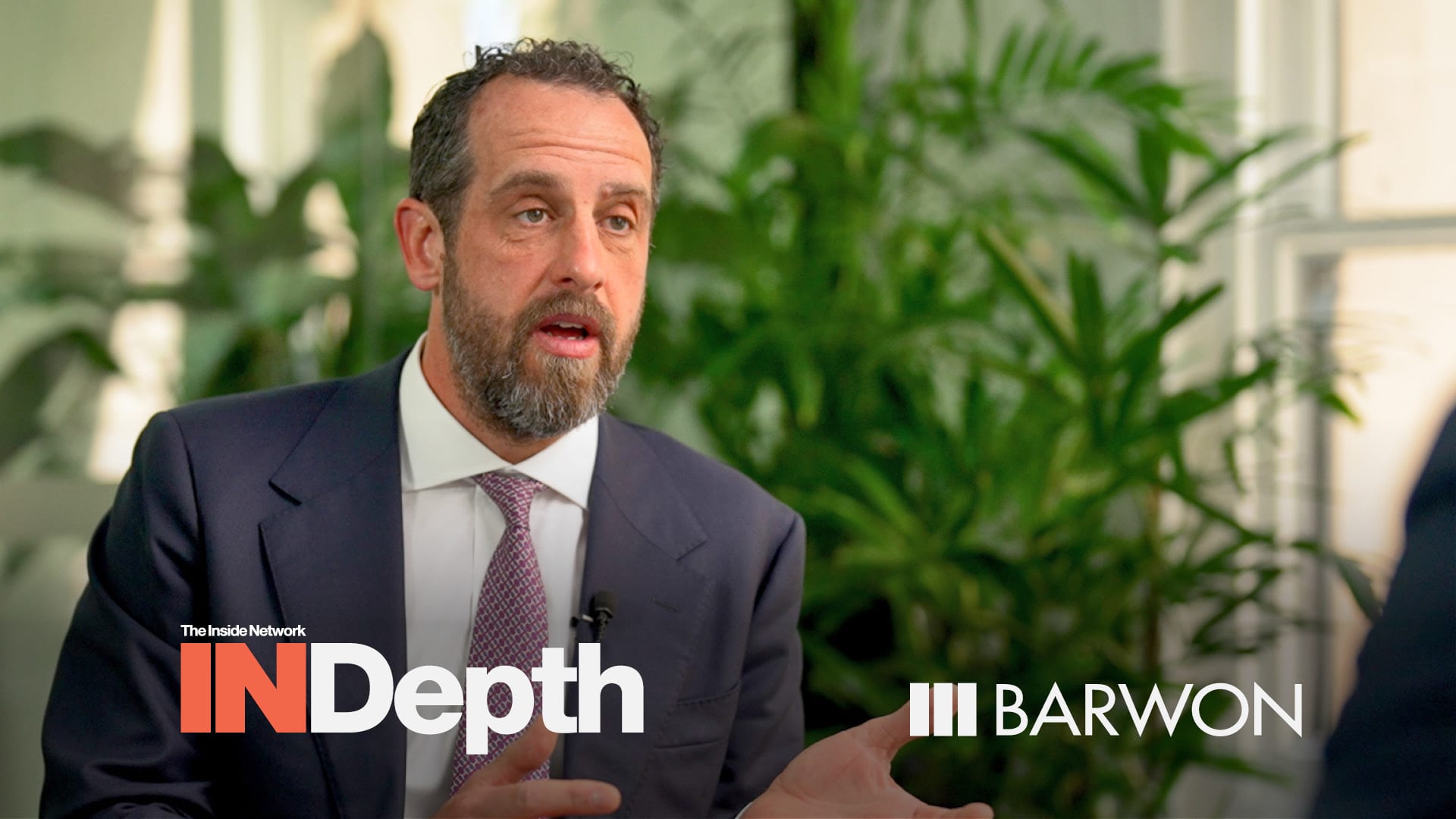
The Australian property market: INDepth with Tom Patrick from Barwon Investment Partners
Tom Patrick from Barwon Investment Partners goes in-depth to Laurence Parker-Brown from The Inside Network on the health of the Australian property market.
-

INSight #447 with Lauren Ryan from Thinktank
Lauren Ryan from Thinktank speaks to Laurence Parker-Brown from The Inside Network on how private credit can change the way advisers think about generating income for clients.
-

Daily Market Update: 05 November 2025
ASX declines amid inflation concerns
The Australian sharemarket dropped to a near six-week low after Reserve Bank of Australia (RBA) Governor Michele Bullock flagged potential upside risks to inflation, causing concern among investors. Although the RBA kept the cash rate steady at 3.6 per cent, as widely anticipated, the S&P/ASX 200 Index (ASX: XJO) fell 81.1 points, or 0.9 per cent, closing at 8813.7. Ten of the 11 sectors ended in the red, led by utilities, marking the fifth drop in the past six sessions. The RBA’s more cautious tone, influenced by stronger-than-expected inflation data, prompted Morningstar’s investment chief Matt Wacher to suggest that rate cuts may be unlikely before the first half of 2026.
Utilities and materials drag market lower
Investor sentiment was further dampened by low trading activity due to the Melbourne Cup public holiday in Victoria. Origin Energy Limited (ASX: ORG) and AGL Energy Limited (ASX: AGL) declined 3.8 per cent and 3.7 per cent respectively, as federal government proposals to provide midday free power weighed on utilities. Falling iron ore prices impacted materials, with Rio Tinto Limited (ASX: RIO) down 2.6 per cent, Fortescue Metals Group Limited (ASX: FMG) down 2.7 per cent, and BHP Group Limited (ASX: BHP) shedding 1.9 per cent. In tech, NextDC Limited (ASX: NXT) rose 4.2 per cent, while WiseTech Global Limited (ASX: WTC), Xero Limited (ASX: XRO), Life360 Inc. (ASX: 360), and Block Inc. (ASX: SQ2) all posted losses. Notable company moves included a 10.6 per cent plunge in Novonix Limited (ASX: NVX) after a key agreement was cancelled, and a 3.6 per cent gain for Southern Cross Media Group Limited (ASX: SXL) following a favourable merger assessment.
Global tech pullback pressures Wall Street
In the United States, major indices retreated on Tuesday amid valuation concerns in tech-heavy sectors. The S&P 500 Index (NYSEARCA: SPY) dropped 1.1 per cent, the Nasdaq Composite Index (NASDAQ: IXIC) fell 2.1 per cent, and the Dow Jones Industrial Average (INDEXDJX: DJI) lost around 240 points. High-profile tech names such as Palantir Technologies Inc. (NYSE: PLTR), NVIDIA Corporation (NASDAQ: NVDA), Advanced Micro Devices Inc. (NASDAQ: AMD), and Oracle Corporation (NYSE: ORCL) led declines. Investor unease was compounded by warnings from Goldman Sachs Group Inc. (NYSE: GS) and Morgan Stanley (NYSE: MS) executives about possible market corrections of 10 to 20 per cent. Despite the selloff, defensive sectors like consumer staples and financials outperformed, with Berkshire Hathaway Inc. (NYSE: BRK.A) gaining 3.3 per cent as investors sought safer assets.
Australian Indices Daily % Weekly % 1 Month % 3 Month % 1 Year % ASX 200 -0.9 -2.2 -1.9 2.8 11.9 Financials -0.3 -0.8 0.9 6.7 20.6 Resources -2.2 1.3 2.3 17.6 17.3 Information Technology -0.9 -3.5 -8.3 -4.6 12.7 Global Indices Daily % Weekly % 1 Month % 3 Month % 1 Year % US 500 -1.1 0.3 3.3 7.6 21.8 Europe -0.3 -0.9 -0.5 4.9 22.6 Japan 0.6 1.4 3.6 10.2 25.7 China top 50 0.3 -0.6 -2.8 5.9 27.5 India top 50 1.3 0.1 4.3 1.1 1.4 Fixed Interest Daily % Weekly % 1 Month % 3 Month % 1 Year % Australian Treasury Bond 0.0 -0.9 0.1 0.2 5.6 Australian Corporate Bond 0.0 -0.8 0.1 0.3 6.3 US Treasury 0.0 -0.8 0.1 1.5 4.4 Cash 0.0 0.1 0.3 0.9 4.2 Commodities & Crypto Daily % Weekly % 1 Month % 3 Month % 1 Year % Gold -0.2 2.8 4.8 18.0 48.6 Silver -0.9 5.9 3.6 30.0 51.1 Crude Oil -0.2 1.5 1.2 -5.0 -3.4 Bitcoin -1.1 -8.9 -13.5 -10.6 51.9 -

Alternatives under scrutiny: Unpacking the opportunities and risks
The growth in alternative asset classes, particularly private credit, is reshaping portfolio construction while also raising important questions around governance, transparency and fitness-for-purpose. That’s the view of Chetan Trehan, sector head at SQM Research.
Trehan, who oversees alternative fund ratings at SQM, highlights that while the category remains broad, encompassing everything from private equity to hedge funds, gold and even Bitcoin, it is private credit that has emerged as the standout growth area. “Our coverage of that sector has increased quite a lot,” he says. “But we’re also slightly cautious… about six months ago, we put the sector on watch because of transparency and governance issues.”
That caution reflects growing industry concern. Several high-profile blow-ups have brought alternative debt strategies under the microscope. Trehan notes that while private credit has appeal as part of fixed income allocations, its risk characteristics and structural differences demand deeper analysis. “We’re trying to get through what are the different characteristics within that sector, which are different to other parts of fixed income or the traditional asset classes,” he says.
Private equity, by contrast, appears less volatile from a research perspective, but coverage and demand remain steady rather than explosive. Trehan explains that private equity is still regarded as a core alternatives exposure. “I would definitely allocate to that,” he says, adding that it is not just about alpha generation but also about the absolute return profile. “Whether it’s a hedge fund or a gold fund, you’ve got to look at what happens when equities correct by 20 per cent or 30 per cent. What will this part of the portfolio do?”
One of the challenges Trehan highlights is how alternatives fit into different portfolio structures. Managed accounts, particularly SMAs, have been slower to adopt alternatives compared to traditional unitised vehicles. “Traditionally, Balanced and Growth funds have allocated a reasonable amount to alternatives, and they should, but in the SMA structure, not so much,” he says. “That’s a conversation that’s happening with fund managers right now.”
Part of the challenge is logistical. Alternatives often come with liquidity constraints, complex pricing or non-standardised reporting, which makes them difficult to implement within the rigid framework of SMAs. But Trehan believes this is a problem that can and should be solved. “It’s about allocating to the appropriate fund managers,” he says. “You’ve got to understand if there’s a good track record.”
Direct property and infrastructure also receive a nod from Trehan as under-utilised tools in portfolio diversification. While Australians tend to be heavily exposed to residential property, Trehan argues that professionally managed unlisted property should not be overlooked. “It’s a good asset class to invest in,” he says. “Not just listed, but unlisted, direct property, or infrastructure, for that matter.”
Gold continues to play a role in alternatives coverage at SQM, and while it lacks the narrative excitement of emerging crypto strategies, it serves an enduring purpose. As Trehan puts it, the focus across all alternatives should be on their correlation to core markets and their ability to deliver absolute return when risk assets falter. “It’s not just about alpha,” he says again. “It’s about what that allocation does when the rest of the market is under pressure.”
With the alternative universe becoming increasingly crowded, and definitions increasingly loose, Trehan’s final message is one of discernment. “We’re agnostic about where the money goes,” he says. “We don’t manage money. But our job is to shine a light on what’s inside these strategies, and ensure advisers and allocators know what they’re getting into.”
-

Compliance is changing, and it could the biggest growth opportunity yet
Across Australia, the advice and financial services industries are entering a period of heightened change, with anti-money laundering (AML) and counter-terrorism financing (CTF) regulatory expansion, privacy reforms, sharper expectations on cybersecurity and offshoring, emerging AI and a renewed focus on investment governance and conflicts. None of this fits neatly into a silo, but put together it tells a consistent story: governance that scales.
Australia’s AML/CTF regime will expand dramatically by March 2026, from covering around 14,000 reporting entities, to nearly 90,000. The law regulates services, not ‘business type,’ so integrated practices combining wealth, property and accounting need to identify exactly which services trigger obligations, and design a single, client-friendly onboarding journey.
Privacy obligations are also tightening. While we’re still waiting for many reforms to take effect, some already apply. Australian Privacy Principle (APP) 11 now requires both technical and organisational measures for security, and by December 2026. Privacy notices must disclose any use of AI in automation decision that impact individuals, and a ‘safe countries’ list will soon define where data can go offshore.
The practical takeaway?
Build the bones before the muscles, and strengthen all privacy frameworks now, from encryption standards and access reviews to vendor due diligence and testing. It’s easier to maintain compliance than to play catch-up.
Cybersecurity, meanwhile, has become an ecosystem issue. A single vulnerability can expose an entire network, and regulators are paying close attention. Policies alone aren’t protection. The focus now is on continuous monitoring, regular testing and genuine accountability at every level of the business.
Decisions deferred need to be documented and remediation plans should be visible and funded, with the same principle applying to offshoring.
AI adds a fresh layer of complexity. The governance gap between use and oversight is widening, as teams experiment with tools that haven’t been formally risk-assessed. A simple starting point is creating a register of AI use-cases, evaluating privacy and accuracy risks and defining when human judgment must be applied.
Establishing an internal AI standard is critical – covering what’s in and what’s out, how data can be managed, and how results are being verified. This builds trust and clarity across the business.
Investment governance is also evolving. Recent regulatory themes point to a sharper focus on supervision, record-keeping and meaningful conflict management. It’s no longer enough to simply have policies on file; leaders must be able to show how they operate in practice. Creating a ‘conflicts map’ across personal, client-to-client and firm-level relationships helps to highlight where structures, incentives, or processes need review.
Compliance doesn’t have to slow a business down. When it’s woven into everyday systems such as onboarding, KPIs, dashboards and alerts, it becomes part of how teams perform, not an administrative burden.
Real-time data can flag emerging risk, including expiring certification or policy gaps before they escalate. When advisers and compliance teams share visibility, conversations shift from ‘checking’ to collaborating, and that’s when culture and systems start to reinforce each other.
For leaders wondering where to begin, focus the next 90 days on a few high-impact steps. Map your AMP services and reliance model. Uplift privacy controls. Run a cyber and offshoring review with clear board oversight. Build an AI register and standard, tighten investment governance and conflict mapping.
So, the question isn’t whether you can afford to do all this, it’s how to design compliance you can run. The answer lies in clarity, automation and embedding governance into business-as-usual. When systems are predictable, people are trained and accountability is shared, compliance stops being a cost centre and becomes a competitive advantage.
Compliance isn’t about the red tape, it’s about creating the safety rails that let your business go faster, and do so more sustainably. When governance is living, not laminated, and when culture supports the ‘why’ behind every rule, compliance become more than protection – it becomes performance.
Catherine Evans is founder and head of legal at Kit Legal.