
Rob Hinchliffe from PineBridge Investments joins James Dunn from The Inside Network to discuss finding true alpha in global equities and the edge active management can deliver.
Blog
-

‘Golden era’ of equity investing ending, warns Talaria boss
Global equity markets are at the “end of a golden era” driven by abundant cash and rising asset prices and the start of a renewed focus on price discipline and earnings quality, according to Jamie Mead (pictured), chief executive of Melbourne-based equities fund manager Talaria Asset Management, which has about $2.8 billion under management.
Talaria, whose primary focus in on fundamental company value rather than top-down analysis, says its “playbook” targets shorter-duration assets less vulnerable to rising rates, companies with strong balance sheets that are more flexible and able to better manage volatility and “genuine diversification” – assets that are independent of the broader market or another asset class.
Mead, a former Goldman Sachs investment banker who trained as a civil engineer, warns the growth in passive investing and index-aligned “active” strategies – mirroring the performance of a specific market – is neglecting genuine diversification, causing investors to “sleepwalk” into concentration risk that arises from over-exposure to a single counter-party, sector or geographic region.
“We do one thing and it is incredibly hard to do,” Mead says. “We generate long-term risk-adjusted rewards by delivering differentiated (or distinct from broader market) returns rather than tracking indexes,” he says. “The strategy typically outperforms during volatile periods.”
Like its namesake Talaria, which were the winged sandals worn by Greek gods and goddesses, it aims to move swiftly and keep one step ahead of its competition by what Mead calls “true diversification” via exposure to different asset classes, structural risk management, liquidity and not hugging the benchmark.Mead says some of the new risks to investors arising from recent major trends in the funds management industry include the threat to diversification caused by the huge popularity of index funds, growing exposure to less transparent and largely unregulated private markets, and the need of retirees for reliable income from their retirement nest eggs.
“Liquidity is just one factor, as there is also the need for de-correlated income, which is earned from sources other than dividends and helps investors meet their living needs, which is particularly important during market downturns,” he says.
“This allows investors to receive income without drawing only on their capital base or relying on companies to pay dividends when that isn’t always reliable or consistent.”
An average Australian male retiring at 65 years is likely to live another 20 years, which means a typical retirement portfolio could have to withstand numerous financial shocks and market downturns. For example, some of the major crises that have rocked global investment portfolios since 2005 include the Global Financial Crisis, Eurozone debt crisis, the COVID-19 crash and an emerging markets and commodities slump.
Market exposureMead says its strategy is “different from most, and certainly the index” because its portfolios are based on direct equities, cash and options. Talaria’s point of differentiation is that it sells put options over its shareholdings — every position in Talaria’s fund begins life as a put option — to generate a source of return that is not correlated with traditional income sources.
“As about one-third of our option trades are exercised, the delta-adjusted market exposure (direct equities and options) for (the past) three and five years are 60 per cent and 58 per cent respectively. There have been times when that exposure was higher, but around 60 per cent is the long-term average,” he says.
“Over a three-year monthly rolling period, the Talaria strategy has outperformed the index 100 per cent of the time in a negative market,” he says. Returns are smoothed by combining income from puts with stock picks.
Mead adds it does not own any of the Magnificent Seven stocks, the group of high-performing technology stocks in the US stock market that have been the main driver of index returns, and has an active share Active share (the fraction of a fund’s portfolio holdings that deviate from the benchmark index) of 97 per cent.
“This is not a reflection of these stocks as companies, but simply a function of our fundamental bottom-up process,” he says. “We don’t pay for growth as it is a relatively poor forward factor. We currently have a negative correlation with the Nasdaq index (which has a major focus on technology), meaning we blend well with other managers and offer genuine diversification for client portfolios,” he says.
The put options, which are priced off volatility, have contributed to sharp outperformance during recent big spikes in the Chicago Board Options Exchange’s (CBOE’s) Volatility Index, a popular measure of the stock market’s expectation of volatility, based on S&P 500 index options. This index is also known as the “fear index” because it tends to rise when investors expect uncertainty or sharp moves in the stock market.
Recent examples include President Trump’s Liberation Day on April 2 when he announced sweeping changes to tariffs, and during the COVID-19 pandemic in 2022, when the firm’s Global Equity Fund Complex ETF (CBOE: TLRA) posted returns of about 8.3 per cent against a loss of 12.5 per cent on the MSCI World Index (excluding Australia). -

Lean levers: How to deploy technology to scale without sacrificing purpose
In an increasingly complex and data-driven advice landscape, the real frontier of competitive advantage is no longer just investment selection but how practices use technology to generate scale, precision and meaningful client engagement. At the INZ Investment Leaders Forum in Queenstown, two leading voices, Mishan Dahia of Atchison (pictured, centre) and Rousseau Lötter (pictured, at right) of Craigs Investment Partners, offered clear-eyed perspectives on where efficiencies from technology are best realised, and how to harness them without compromising a firm’s identity.
For Dahia, the starting point is always clarity of purpose. “The most successful practices we see begin with four foundational pillars: lead generation, client strategy, scalable investment capability and the client experience,” he said. From that framework, technology can be layered-in deliberately, aligned with the client type and the investment philosophy. Whether the practice is focused on high-net-worth clients and private markets or lower-cost diversified ETF models, understanding where technology supports the proposition is key.
Lötter agreed, but focused on the complexity of implementation in a large national firm. Craigs Investment Partners has more than 180 advisers managing assets for clients across the wealth spectrum, from modest portfolios to mandates in excess of $100 million. “We knew from the beginning that trying to integrate new systems and AI tools across a network of that scale would require ruthless prioritisation,” he said. “We used simple matrices to rank projects by cost, complexity and time saved. It became clear quickly which changes we should make now, and which were three-year plans”.
One of the more nuanced challenges for large institutions is the human aspect of change management. Lotter acknowledged the cultural resistance that can come with digital transformation. “You are effectively asking people to build systems that might one day replace part of their role. That is a hard message,” he said. Craigs chose to adopt the ‘cyborg’ metaphor, the idea that advisers are integrating tools to become more capable versions of themselves. “We framed technology not as a replacement, but as augmentation,” he said.
To support that narrative, Craigs hosted internal “bars and masterclasses” to showcase how advisers were using technology in small, practical ways. From voice-controlled itinerary assistants to automated report generators, these examples made the shift tangible and approachable. “It moved the conversation from fear to curiosity,” Lotter said. “And importantly, it tied back to one of our core values, that client intimacy is non-negotiable. We want scale, but not at the expense of personal connection”.
Dahia provided a window into how Atchison is embedding AI into both its internal and adviser-facing systems. “Our SMAs are run on Python models that advisers can access through a centralised portal. That portal doesn’t just show portfolios, it also uses AI to generate commentary at the asset class and manager level,” he said. “Instead of spending hours writing quarterly reviews, it’s automated. That frees-up time for strategic conversations with clients”.
However, both speakers cautioned against blind trust in AI. Lotter described his own role as that of an “enthusiastic idiot,” embracing experimentation but wary of over-reliance. “We have analysts who can spot hallucinations in output. The key is layering-in checks, prompt training, agent development and expert oversight. Style consistency also matters. We’re training our models to write in different voices for different audiences, from retail clients to institutional boards,” he said.
Atchison’s application of AI also benefits from its principal’s background in technology. “Our journey started with digital thinking, not retro-fitting tech onto an analogue process,” Dahia said. The firm’s SMA offering has become more compelling as a result, allowing financial advisers to scale from 80 clients to over 200, while reducing their compliance load and increasing portfolio consistency. “Adoption is accelerating, and the efficiencies are undeniable,” he said.
Lötter said New Zealand’s SMA adoption is still early in its development compared to Australia, but he sees significant opportunity. “We’re about one to two years into serious change management and about three to four years from full maturity. There is appetite, but also caution. Our job now is to train both advisers and clients for what comes next,” he said.
Internally, Craigs is shifting its core model from a hybrid advice service toward more fully discretionary mandates, supported by robust risk systems and investment infrastructure. Lötter noted that this shift will take time, but the trend is irreversible. “Clients want efficiency, but they also want oversight. Our co-pilot service still includes client input, which keeps them engaged. But increasingly, the actual investment engine is being professionalised and centralised,” he said.
The power of managed accounts, Dahia argued, lies in their capacity to align business operations with a firm’s strategic intent. “It is not just about investment management. It is about freeing-up adviser capacity, improving client outcomes and enabling growth. The conversations shift from product-picking to portfolio construction and life planning. That is a much higher-value dialogue,” he said.
Technology, though, is only as good as the people using it. Both speakers stressed the importance of upskilling and creating a culture of curiosity. Lötter described how Craigs is supporting both its junior and senior advisers in developing AI proficiency, while also developing standardised agents for common tasks. “We want everyone to engage with this, not just the ‘tech people.’ That means lowering the barrier to entry and making experimentation part of the culture,” he said.
As for the risks, both panellists were realistic. AI models can hallucinate; integrations can fail. Promises of scale can lead to client detachment if not carefully managed. But with the right philosophical underpinning, these challenges become design choices rather than crises. “This is not about tech for tech’s sake,” Dahia concluded. “It’s about making sure your firm is structurally ready to serve your clients better, faster and more sustainably”.
Lötter echoed that sentiment. “Efficiency is not the end goal. Relevance is. If we get this right, we are not just saving time. We are building firms that can survive the next decade of disruption. And that, ultimately, is what matters most,” he said.
-

Daily Market Update 06 October 2025
ASX closes in on record as growth sectors rally
The S&P/ASX 200 Index (ASX: XJO) climbed 41.5 points to finish at 8,987.4, inching toward its all-time high of 9,019.1. Gains in healthcare, IT, and consumer discretionary stocks helped offset weaker performances from energy and utilities. Eagers Automotive Limited (ASX: APE) surged 15.3 per cent after securing a AUD 452 million capital raise to acquire a 65 per cent stake in CanadaOne Auto, expanding its footprint into North America. Meanwhile, Mesoblast Limited (ASX: MSB) rallied 8.7 per cent after its stem cell therapy received U.S. Medicare recognition.Investor sentiment steady despite oil and gold drag
Optimism remains supported by prospects for rate cuts, solid U.S. economic momentum, and improving domestic indicators. Energy stocks underperformed as Brent crude prices fell around 8 per cent for the week ahead of an OPEC+ meeting, dragging Santos Limited (ASX: STO) lower. Gold stayed firm near $US3,860 an ounce amid U.S. political uncertainty, but local gold miners such as Northern Star Resources Limited (ASX: NST) and Evolution Mining Limited (ASX: EVN) declined on profit-taking. Utilities also lagged, with Origin Energy Limited (ASX: ORG) and AGL Energy Limited (ASX: AGL) both retreating.Wall Street mixed as shutdown stalls key data
U.S. markets ended the week mixed amid mounting concern over the government shutdown, which has delayed economic data including the key jobs report. The Dow Jones Industrial Average (NYSE: DJI) rose 240 points to close at 46,758, extending its record streak, while the S&P 500 Index (NYSE: SPX) ended flat and the Nasdaq Composite Index (NASDAQ: IXIC) slipped 0.3 per cent as tech stocks weighed. Palantir Technologies Inc. (NYSE: PLTR) dropped 7.5 per cent, and Applied Materials Inc. (NASDAQ: AMAT) fell after flagging a potential $600 million revenue hit from chip export curbs. Still, all three major indices posted solid weekly gains.Australian Indices Daily % Weekly % 1 Month % 3 Month % 1 Year % ASX 200 0.5 2.3 3.2 5.6 13.9 Financials 0.2 3.0 3.4 4.1 25.2 Resources -0.1 1.6 5.5 16.6 10.8 Information Technology 1.8 2.3 5.1 7.4 25.5 Global Indices Daily % Weekly % 1 Month % 3 Month % 1 Year % US 500 0.0 0.5 3.6 6.9 21.9 Europe 0.6 2.0 3.9 4.4 22.8 Japan 1.2 -1.0 2.2 7.1 17.5 China top 50 -1.2 3.6 7.3 15.1 24.4 India top 50 0.4 0.3 -0.9 -5.9 -2.7 Fixed Interest Daily % Weekly % 1 Month % 3 Month % 1 Year % Australian Treasury Bond 0.1 0.4 0.7 0.1 3.5 Australian Corporate Bond 0.1 0.4 0.7 0.4 4.4 US Treasury -1.7 0.7 1.4 1.6 -0.3 Cash 0.1 0.3 0.9 4.3 Commodities & Crypto Daily % Weekly % 1 Month % 3 Month % 1 Year % Gold 0.1 2.2 8.3 15.9 50.5 Silver -0.2 4.6 15.2 27.9 51.9 Crude Oil -1.7 -7.3 -4.1 -5.0 -6.6 Bitcoin 1.9 10.1 6.8 9.4 102.5 -

Daily Market Update: 03 October 2025
ASX jumps on mining and bank strength
The Australian sharemarket posted its strongest session in six weeks, with the S&P/ASX 200 Index (ASX: XJO) surging 1.1 per cent or 100.2 points to close at 8945.9. Gains were broad-based, with seven of the 11 sectors advancing, as the All Ordinaries Index (ASX: XAO) also climbed 1.1 per cent. The rally was led by a sharp rebound in banking stocks and ongoing strength in healthcare shares, tracking momentum from Wall Street. Key performers included Commonwealth Bank of Australia (ASX: CBA), up 1.7 per cent, Westpac Banking Corporation (ASX: WBC), National Australia Bank Limited (ASX: NAB), and Australia and New Zealand Banking Group Limited (ASX: ANZ), all finishing firmly in the green.Gold surge drives mining rally
A record high in gold prices ignited strong gains across the materials sector, which jumped 1.8 per cent. Gold soared to $US3895.38 an ounce amid heightened uncertainty from a US government shutdown, lifting producers such as Westgold Resources Limited (ASX: WGX), up 8.3 per cent, Evolution Mining Limited (ASX: EVN), Northern Star Resources Limited (ASX: NST), and Bellevue Gold Limited (ASX: BGL). Mining giants BHP Group Limited (ASX: BHP) and Rio Tinto Limited (ASX: RIO) both rose over 1 per cent. Micro-cap explorer Tambourah Metals Limited (ASX: TMB) spiked 44 per cent after Tribeca Investment Partners took a substantial stake. In corporate news, ARN Media Limited (ASX: A1N) edged higher despite a leadership change, while REA Group Limited (ASX: REA) fell following news of its Canadian acquisition. Other notable moves included James Hardie Industries plc (ASX: JHX) gaining 1.2 per cent and DroneShield Limited (ASX: DRO) retreating nearly 10 per cent on profit-taking.Global equities boosted by tech optimism
US equity markets reached fresh record highs, with the S&P 500 Index (NYSE: SPX) rising 0.1 per cent, the Nasdaq Composite Index (NASDAQ: IXIC) up 0.4 per cent, and the Dow Jones Industrial Average (NYSE: DJI) adding 80 points. The rally was driven by renewed enthusiasm for artificial intelligence, sparked by a $6.6 billion share sale from OpenAI, valuing the company at $500 billion. This lifted key tech names including NVIDIA Corporation (NASDAQ: NVDA), Broadcom Inc. (NASDAQ: AVGO), and Advanced Micro Devices, Inc. (NASDAQ: AMD). Despite the tech surge, Microsoft Corporation (NASDAQ: MSFT) and Tesla Inc. (NASDAQ: TSLA) pulled back, the latter giving up gains even after a solid rise in quarterly deliveries. Meanwhile, political tensions rose as former President Donald Trump threatened federal job cuts during the ongoing government shutdown.Australian Indices Daily % Weekly % 1 Month % 3 Month % 1 Year % ASX 200 1.1 2.0 0.9 5.1 12.6 Financials 1.6 1.9 -1.0 1.1 21.9 Resources 1.6 0.5 2.6 17.6 8.0 Information Technology 0.3 -0.2 1.1 5.8 23.1 Global Indices Daily % Weekly % 1 Month % 3 Month % 1 Year % US 500 0.1 0.7 3.3 7.3 23.2 Europe 1.2 2.4 3.3 3.6 23.3 Japan 0.2 -1.2 1.3 7.0 19.4 China top 50 2.4 0.2 4.4 12.0 26.9 India top 50 -0.4 -0.8 -0.9 -5.9 -3.0 Fixed Interest Daily % Weekly % 1 Month % 3 Month % 1 Year % Australian Treasury Bond 0.2 0.2 0.3 0.0 3.1 Australian Corporate Bond -0.1 0.2 0.4 0.3 4.0 US Treasury 0.1 0.0 1.0 1.4 -0.6 Cash 0.1 0.1 0.3 0.9 4.3 Commodities & Crypto Daily % Weekly % 1 Month % 3 Month % 1 Year % Gold -0.2 2.8 9.5 15.1 50.7 Silver 0.8 4.2 15.1 29.2 54.6 Crude Oil -0.6 -4.9 -5.1 -4.2 -4.3 Bitcoin 2.7 5.9 5.7 9.4 104.2 -
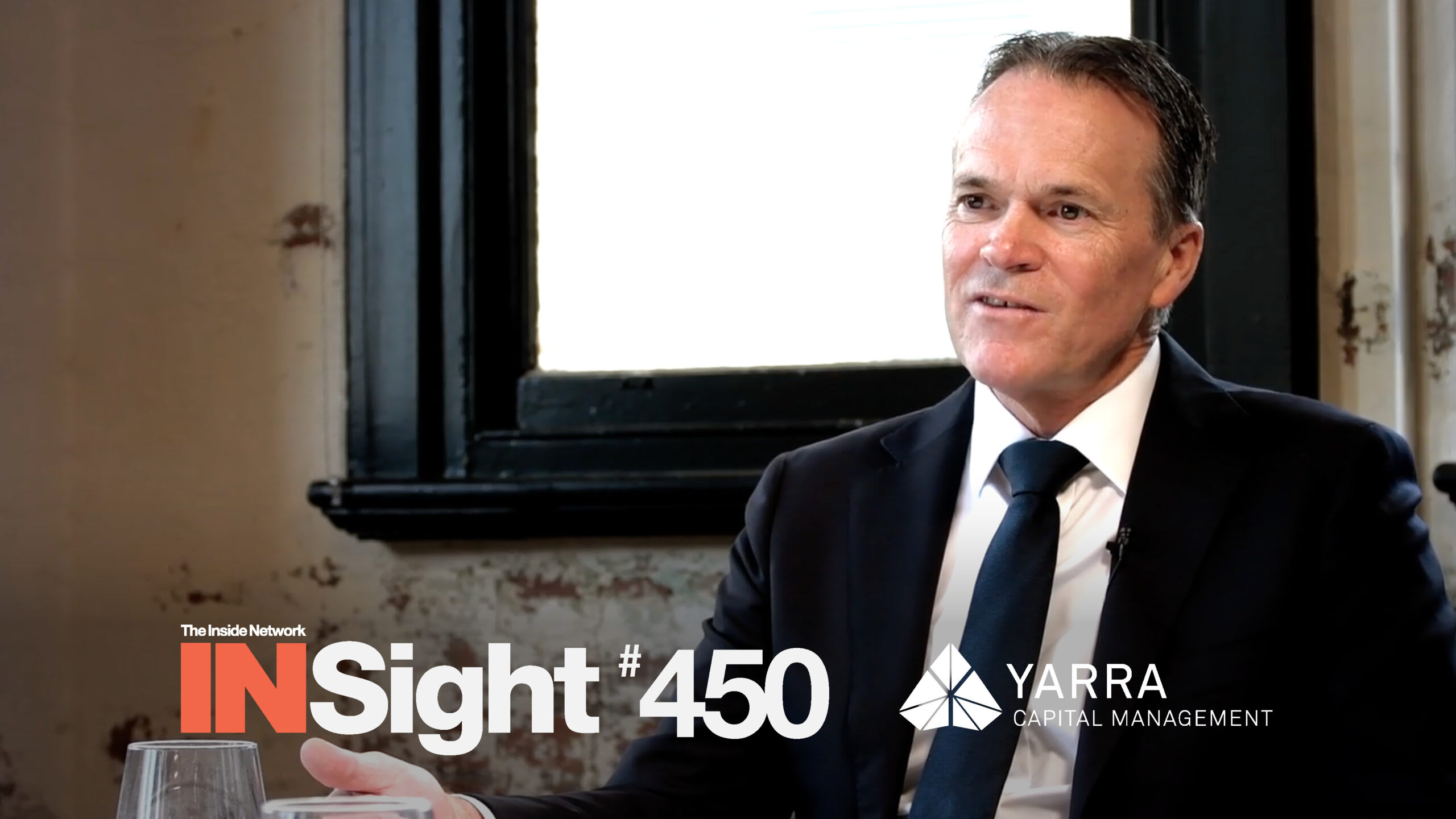
INSight #450 with Roy Keenan from Yarra Capital Management
Roy Keenan from Yarra Capital Management shares insights with Mishan Dahia from Atchison on staying ahead in volatile markets.
-

Holding the pen: Navigating private credit with discipline and scale
In the rapidly evolving world of private credit, scale can be a competitive advantage, but only if it is matched with discipline. Bryan High, managing director and head of global private finance at Barings, offered a detailed insight into the firm’s approach during his appearance at the Investment Leaders Forum in New Zealand. His core message was as straightforward as it was urgent: capital preservation is the cornerstone of long-term success in private credit, and achieving it requires a deep commitment to underwriting quality, relationship-driven origination and structural control.
Barings, originally the captive manager of insurance giant MassMutual, brings a long-duration mindset to the private capital landscape. That insurance heritage has instilled a culture focused less on quarterly performance and more on capital stewardship over decades. “‘Don’t lose money’ is rule number one, two and three,” High said. “We’re not thinking in terms of the next quarter, but the next 30 to 60 years”.
This perspective guides Barings’ approach to underwriting. Every deal is assessed from the bottom up, with a strict filter applied at both sector and structural levels. High highlighted sectors with inherently higher risk, commodity-linked businesses, cyclical sectors, high-capex models and low-margin operators as areas Barings deliberately avoids. “You might get 50 basis points more from a deal in those sectors, but one or two mistakes will wipe that out,” he said.
Barings’ underwriting team places equal weight on both the financial metrics and the legal documentation. Covenant packages are not just about financial ratios, High argued, but also about structuring protections that can be enforced if something goes wrong. “The spread matters, but the ability to get your money back matters more. Our loss rate since inception is three basis points, and that’s not by accident,” he said.
That success is partly enabled by Barings’ role as lead agent in more than 90 per cent of its deals. “We hold the pen,” High explained. “We negotiate the documents and we live with the consequences. When something breaks, we’re at the table driving the solution.” Whether it means working constructively with sponsors or taking control and injecting new money, Barings ensures it retains the contractual leverage necessary to protect its downside.
The firm’s sweet spot is what High calls the “core middle market,” companies with EBITDA between US$15 million and US$75 million ($23 million–$115 million). At this size, sponsors are large enough to require meaningful capital but still small enough to allow for bespoke structuring. “You can still get real terms at that level,” he said, drawing a contrast with the upper market, where large credit funds are increasingly competing with covenant-light CLO-(collateralised loan obligations)-driven deals that erode lender protections.
Another core belief at Barings is that scale should not come at the cost of uniqueness. High warned against the increasing portfolio overlap between private credit managers, especially in large deals with 30 to 50 lenders. “You end up buying three different managers with the same portfolio,” he said. “That’s not diversification, it’s concentration risk.”
Instead, Barings aims to build portfolios around differentiated deal flow, leveraging the breadth of the organisation across asset-backed finance, real estate, private equity co-investments and capital solutions. “We try to be relevant to sponsors in more ways than just senior secured LBO lending,” High said. This multi-dimensional approach helps to secure deal flow, especially during more challenging markets.
High also emphasised that underwriting quality is not just about analytics, it is about judgment and relationships. Poor management teams and flawed acquisition strategies are often behind underperformance, he said. “The themes are consistent across failed deals. It’s less about missing a number and more about backing the wrong people or strategy,” he noted.
Relationships, he argued, play a critical role in the private credit model. Longevity and consistency build trust, especially in sponsor-backed finance where the same firms may return for capital across cycles. “In difficult situations, people remember how you behave,” High said. “We’re willing to lean-in on rate or structure, but we do that with the partners we’ve known for decades.”
Where Barings differs most is in its handling of complexity. The firm’s Capital Solutions team, which High formerly led, operates like a clean-up crew for deals that fall outside the standard credit box. “We’re the janitors at the end of the conveyor belt,” he said with characteristic humility. These are nuanced, often harder-to-source opportunities that come with structuring risk but also deliver a solutions premium well above typical direct lending returns.
The capital solutions business also illustrates how Barings sees the full capital stack, not just senior debt, as investable. “It could be senior secured, mezzanine, or even equity,” High said. The aim is to be flexible and opportunistic, while still prioritising capital protection above all else.
This conservatism may seem cautious in a market often driven by yield compression and capital velocity, but High sees it as essential. “Private credit is a ‘beta’ asset class. You’re not going to outperform massively on rate. The way to stand out is by making sure you get your money back,” he said.
Ultimately, the combination of scale, underwriting discipline and structural control gives Barings a distinctive position in the global private finance ecosystem. With more than US$55 billion ($84.6 billion) in private credit assets, the firm is large enough to be relevant, but focused enough to be selective. It is that balance, between reach and rigour, that underpins the model.
For financial advisers, the takeaway is clear. The real differentiation in private credit is not in who offers the highest yield, but in who can consistently preserve capital while investing at scale. As High concluded, “When we talk about being ‘at the table,’ it means we’re making sure we don’t lose money. That’s what our clients expect, and that’s what our platform is built to do.”
-

You can bet on mean reversion — it’s undefeated
If you’re a high-net-worth investor or family office, chances are you’ve benefited handsomely from the equity bull market of the past decade. Staying long US large-cap indices has been the winning strategy. Mega-cap tech, AI narratives and index flows have done the heavy lifting.
But as the old saying goes: “Pigs get slaughtered.” Staying too long at this party may be playing with fire. Unlike benchmark-tied superannuation funds that must run with the herd, family offices and private investors enjoy something more valuable: flexibility.
At today’s valuation extremes, flexibility isn’t just an advantage – it’s a weapon.
Tick Tock, Tick Tock David Rosenberg (Rosenberg Research) has been clear: “Starting valuations determine future returns. Overpay and you borrow from tomorrow’s performance.”
David Collum (Cornell University) is even blunter: “Mean reversion is undefeated. Every cycle resolves the same way – painfully.”
From these current US large-cap levels, history points to potential 30 per cent–60 per cent draw-downs when valuations normalise.
Timing is unknown, but at least you can apply some practical suggestions (below) to protect the massive gains enjoyed over recent periods.
The problem with today’s market positioning
The crowd has gone all-in on one story:
- Long everything AI and mega-cap tech.
- Assuming lower interest rates will justify valuations.
- Underweight duration (convexity), leaving portfolios exposed.
But technology’s cash flows are most sensitive not to the Federal Funds rate, but to 5–10 year Treasury yields. If those back-up – even modestly – the maths underpinning today’s valuations falls apart. Add-in record debt loads, slowing global growth and rising unemployment risk, and the AI-driven optimism starts to look fragile.
As Rosenberg has warned: “Cycles don’t die of old age; they die of excess and of policy error.” Right now, excess is everywhere, and the margin of safety is gone.
At a minimum, we should be positioning ourselves closer to the fire exit – in case someone yells “fire!” in this crowded theatre.
Why HNW and family offices are different
Superannuation funds and many retail advisors are forced into benchmark hugging – career risk punishes deviation from the herd’s strategic allocation benchmarks. But family offices and private investors have a mandate that’s very different:
- Preserve capital first.
- Maintain liquidity.
- Wait for opportunity.
Collum often reminds readers in his recommended Year in Review writings:” those who keep cash and courage in reserve buy assets at generational discounts when the herd is forced to sell.”
Suggested positioning adjustment ideas now (not financial advice)
If you believe the laws of gravity still apply, consider these moves:
- Protective hedges / Long-volatility exposures (especially if you are avoiding duration)
- Replacement trades – e.g. Equity call strategies and reduction of physical exposure
- Alternative return streams – ( High quality private credit, selected hedge fund strategies, top-tier private market plays)
- Listed growth alternatives – listed property, listed infrastructure, equally weighted indices have less stretched historical valuations versus large-cap indices
- Diversified equity exposures – small-cap value, lower-volatility strategies, fundamental
- Geographic diversification – lower valuation multiples in places like Japan, China, emerging markets and Australia
- Liquidity discipline – re-balance more frequently from equity ‘wins,’ to diversify
Case Shiller PE
Aug 24 2025 – Mean 17.27 The bottom line
Yes, AI will deliver real productivity gains. But as Rosenberg and Collum both emphasise, the narrative always collides with valuation gravity. Debt, demographics, slowing global growth, and the sensitivity of tech to long-term rates make today’s optimism precarious.
For family offices and HNW investors, the choice is clear: chase the herd a little longer, or preserve capital and prepare to be a buyer when mean reversion resets the playing field.
History shows who wins: those who step aside before the cliff, not those who run with the sheep.
Michael Armitage CAIA is principal of Fundlab Strategic Consulting Pty. Ltd.
Disclaimer: This article is provided for informational and educational purposes only and does not constitute financial product advice, investment advice, or a recommendation to buy or sell any security, derivative, or investment strategy. The views expressed are those of the author and are based on information believed to be reliable at the time of writing, but no representation or warranty is made as to accuracy, completeness, or fitness for purpose. Past performance is not indicative of future results. Readers should seek their own independent legal, financial, tax, or other professional advice before making any investment decisions.
-

Unlocking Australia’s hidden fixed income advantage
For many Australian investors, the fixed income component of their portfolios has traditionally looked outward. The belief has been that offshore markets offer greater scale, diversification and sophistication, making global allocations a logical choice. However, a closer look at the domestic fixed income landscape reveals a different story, one that is not only larger and more diverse than often assumed, but increasingly attractive from both a risk and return perspective.
A new white paper, The Untapped Potential of Australia’s Multi-Sector Fixed Income Market, commissioned by Yarra Capital Management and authored by Atchison, explores this opportunity in detail. It challenges the conventional reliance on benchmark-aligned strategies and makes a clear case for investors to revisit how they approach domestic credit.
The starting point is the size and depth of the Australian market itself. At over A$3 trillion, it ranks among the top five fixed income markets globally. Yet most portfolios remain closely tied to narrow benchmarks such as the Bloomberg AusBond Composite 0+ Index. This index, widely adopted by super funds and other institutional investors, serves as the APRA-recognised benchmark for Australian fixed income. As a result, many portfolios are effectively benchmark-hugging, driven by regulatory alignment and peer comparison pressures. However, the index is dominated by sovereign and high-grade public credit, excluding substantial segments of the market including private debt, residential mortgage-backed securities (RMBS), asset-backed securities (ABS) and syndicated credit. The outcome is a constrained portfolio design that often leaves meaningful return and diversification opportunities untapped.
This exclusion is not without consequence. By focusing on benchmark-constrained strategies, investors are potentially foregoing significant sources of yield, diversification and resilience. The paper argues that broadening the opportunity set to include a wider range of domestic credit exposures can materially improve portfolio outcomes, particularly in today’s market environment.
There are several reasons why this discussion is timely. Yield curves have shifted, and traditional sources of fixed income return are offering less margin for error. At the same time, private and structured credit markets are delivering attractive premiums that are not captured by standard indices. Furthermore, while global allocations can provide valuable diversification, they also introduce currency risk and foreign sovereign exposures that may not be desirable in all scenarios.
The white paper presents a series of model portfolios to illustrate the potential of a multi-sector approach. For example, a portfolio that includes both public and private debt exposures would have historically delivered an excess return of approximately 0.80 per cent a year (over rolling five-year periods) over the benchmark, with only modest additional tracking error. A broader portfolio incorporating private debt, securitised assets and other alternatives achieved an even higher excess return of just over 2 per cent a year (over rolling five-year periods), with a tracking error of less than 1 percent. These results were delivered with lower overall duration and volatility, highlighting the potential to take on risk more efficiently when portfolios are diversified across sectors.
What stands out in the analysis is not just the potential for higher returns, but the improved information ratios and the reduced reliance on traditional sources of interest-rate exposure. In a world where bond markets are more sensitive to policy shifts and global volatility, this added flexibility can provide meaningful risk management benefits.
Of course, accessing these opportunities is not without complexity. Implementation requires more than a simple shift in allocation. Successful multi-sector credit investing demands access to high-quality origination, strong credit underwriting, and robust risk frameworks. The paper makes clear that not all managers are equipped to deliver this, and careful due diligence is essential.
For investors, the message is clear. There is an opportunity to reframe how fixed income portfolios are constructed. By expanding beyond traditional benchmarks and incorporating a broader set of domestic credit exposures, investors can enhance returns, manage risk more dynamically and reduce exposure to global uncertainties.
This does not mean abandoning global credit altogether, nor does it suggest that benchmarks have no place. Rather, it calls for a more considered and nuanced approach to portfolio construction. It is about recognising that the Australian fixed income market offers far more than is often assumed, and that with the right design and execution, these opportunities can be captured in a risk-aware and cost-effective manner.
Download the Full White Paper
To access the detailed data, modelling assumptions, sector insights, and implementation guidance, download the full white paper here:
-

Institutional grade private markets: INDepth with Felicity Walsh from Franklin Templeton and John Lee from Lexington Partners
Felicity Walsh from Franklin Templeton and John Lee from Lexington Partners goes in-depth with Laurence Parker-Brown from The Inside Network on bringing institutional-grade private markets to wealth investors.

