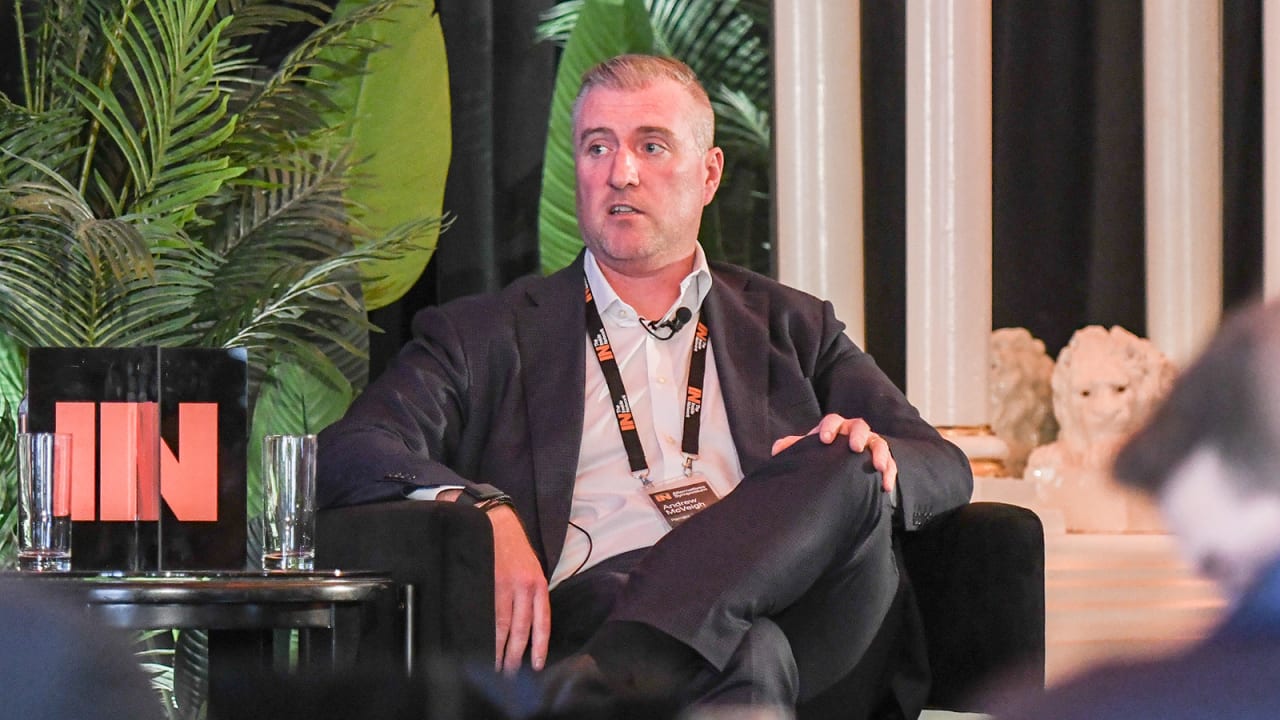
“If you’re not willing to invest your own money into the assets that you’re generating, then you shouldn’t be selling it to anybody else,” says Andrew McVeigh, managing partner at Sydney-based alternative asset manager Remara. “It’s that simple.”
Alignment between manager and investor is central to the credit platform McVeigh has built. While the debate around private credit continues to split views among advisers, McVeigh believes the question of alignment is the most important one a client or adviser can ask.
“We do have skin in the game,” he says. “We do have risk retention. We do invest in a multitude of equity-like structures behind investors. That ensures we’re treating our investors appropriately. We’re not arbitraging with fees or putting money out the door without consequence.”
In a landscape where opaque fee structures and yield-chasing behaviour still persist, McVeigh believes discipline and predictability are the defining traits of well-structured credit investments. “Default fees go to our investors. Establishment fees go all the way through the structure and come out the bottom of the waterfall. That’s important,” he says.
Remara’s core platform focuses on asset-backed loans to Australian small-to-medium-sized enterprises (SMEs), delivered through securitised structures that offer self-amortising, monthly principal and interest repayments. “You don’t really want a large pool of assets where you need to do a lot of work to extract the value,” McVeigh says. “Securitised credit deals with that. These are granular pools, self-liquidating, and you know what you’re getting.”
For McVeigh, this isn’t just about protecting investor capital, it’s also about eliminating noise. “Credit gives you the ability to invest and get rid of the distraction,” he says. “You’re not worried about whether the Nasdaq’s up or down. You’re not worried about what Trump’s saying. There’s value in that, for us as a manager, for advisers, and for investors.”
That ‘distraction-free’ return profile, underpinned by contractual cash flows, is why Remara sees private credit, and particularly securitised SME credit, as suitable for long-term allocations across different investor profiles.
“We’ve created four different credit funds that go across our capital stack,” McVeigh explains. “Not every investor is the same. Some are 35 and looking for growth, others are approaching retirement and want certainty of capital and liquidity. Our funds map to that.”
The liquidity profile is often misunderstood, particularly when compared to public markets. McVeigh offers a personal example: a hybrid security he once owned that fell from $99 to $19 during the GFC, despite paying its coupon and being redeemed at par. “There was nothing wrong with the credit,” he says. “You just didn’t have a bid.”
That experience informs how he thinks about structuring liquidity today. “There’s a lot of embedded liquidity in the market at the moment, but my view is we are getting closer to a credit event than further away,” he warns.
Remara currently manages $2.8 billion, with $2 billion of that coming from institutions including US and Australian banks and pension funds. The remaining $800 million is sourced from advised and direct investors. “Understanding who is investing in the pool is critical,” McVeigh says. “If you’re uncertain about the asset class or the manager, don’t invest. It’s that simple.”
He believes part of the value in securitised SME credit is in the design of the structure itself. “When we create a pool, we’re flexing the structure against past stress events, the GFC, the 1991 recession. If everything stays the same, you’ll get your statistical outcome. If something does go wrong, that’s already embedded in the risk profile.”
Crucially, that risk modelling is independently verified. “It’s not us marking our own homework,” he says. “We work within levels set by Moody’s, S&P and Fitch. You’re working on four or five standard deviations in terms of risk characteristics. That gives consistency.”
While the mechanics of credit structuring may not appeal to every client, the outcomes do. “You get principal back; you get to redeploy the cash. You’re not waiting five years to be repaid and guessing what the market will look like then,” he says. “You’ve got liquidity windows that reflect real conditions.”
At the heart of Remara’s approach is an insistence on alignment. “You want to be investing with someone who loses their money first,” McVeigh says. “Because they’ll act in accordance with protecting their funds, and through protecting their funds, they’re protecting yours.”